by Yinka Kareem
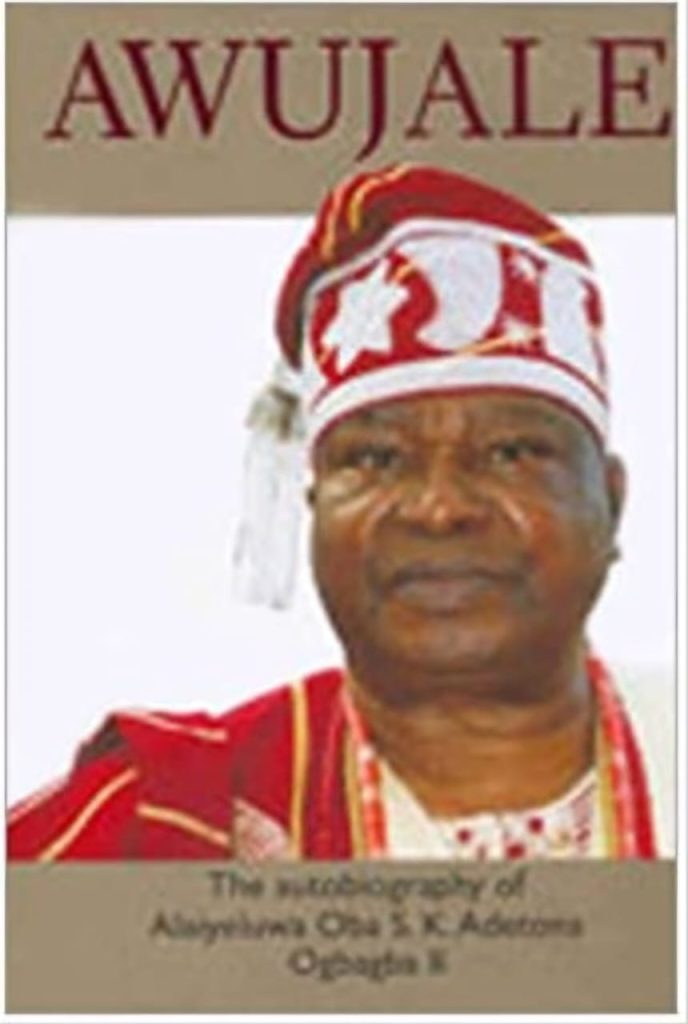
At the Islamic funeral held for Oba Sikiru Adetona, the Awujale of Ijebu Ode, on Monday 14th of July, 2025, some traditional custodians were prevented from attending by security personnel.
This action was part of the enforcement of the Obas, Chiefs, Council of Obas and Traditional Council Law of Ogun State 2021, a legislation signed into effect by Governor Prince Dapo Abiodun in January 2022.Section 55 (ii) of the law states that “A Traditional Ruler shall be entitled to be buried in accordance with the customs and traditions of the land; save, however, that his body shall not be subjected to any mutilation or cannibalization.” (https://pmnewsnigeria.com/2025/06/29/ogun-clarifies-law-on-traditional-rulers-burial-rites/) .
This legal provision, however, is viewed by some as a cultural setback rather than progress. It represents a significant denigration of Yoruba cultural heritage. This unfortunate event evokes Fela’s concept of “colonial mentality,” and how leaders prioritize individual rights over collective rights, all under the guise of modernization. In doing so, they sideline the foundational principles of natural justice.
Before engaging with this complex issue, it’s essential to first explore the historical origins of mutilation and ritual cannibalism within Yoruba royal burial customs.
The King Nimrod’s Connection . Interestingly, the origins of this practice of mutilating the remains of Yoruba monarchs does not appear in any Yoruba oral tradition; this has led me to speculate that it originated from ancient Mesopotamian.
Oral histories from that region recognize King Nimrod as the first monarch to wear a crown, symbol of royal authority. Following his death, some sources claim that “Nimrod’s dead body was cut into pieces.” (https://www.hwalibrary.com/cgi-bin/get/hwa.cgi?action=getrefbook…)
Lee Thriepland recounts that Semiramis, the wife of Nimrod, declared her husband had not truly died but had risen to the sun, transforming into a god. (https://www.faithwriters.com/article-details.php?id=196415). Interestingly, the Yoruba phrase for an Oba’s death, “ascending into the attic” (wo aja), bears a striking resemblance to Semiramis’ portrayal of divine elevation.
Motivations Behind Cannibalism in Yoruba Royal CustomsSamuel Johnson notes that, “Tradition says that in the early time while the King-elect is in the Otun’efa’s house among other dishes brought to him to partake of is one prepared from the heart of the late King which has been extracted and preserved.”(History of the Yoruba).
This ritualistic and symbolic act can be interpreted through broader anthropological insights. Tim Newman explains “In some cultures, once a person has died, their loved ones consume parts of their body so that they, quite literally, become a part of them.” (https://www.medicalnewstoday.com/articles/311277) This suggests that the Yoruba may perform this ritual so the new ruler can embody the essence of his predecessor.
Additionally, Shirley Lindenbaum observes that in certain cultures, the act of consuming one’s enemy serves to absorb their strength or attributes. (https://www.anthroencyclopedia.com/entry/cannibalism.)
But in Yoruba tradition, when a king passes away, the successor doesn’t view the deceased as a rival. Instead, they believe that by ritually consuming the former ruler’s heart, they can inherit the predecessor’s spiritual power and authority.
Alaje Fadesiye notes that in Yoruba tradition, the Ọ̀kàn (heart) is not merely a physical organ, it represents a profound source of divine energy and symbolic meaning. (https://www.ileoro.org/post/%E1%BB%8D-…)
Colonial Mentality and the Issue of Mutilation of an Oba ‘s Corpse Fela Anikulapo famously described colonial mentality as a mindset that devalues African identity, summed up in the idea that “anything black is bad / foreign things are better.” (https://www.okayafrica.com/fela-kuti-colonial-mentality/).
This attitude is reflected in the disdain some individuals show toward Yoruba traditional burial rites, particularly the practice of corpse mutilation. Their preference for Islamic and Christian rites, which avoid such rituals, suggests a deeper admiration for foreign customs over indigenous ones. Yet, it’s important to recognize that ritual mutilation of corpses in burial practices isn’t unique to the Yoruba; it exists in other cultures as well.
Mutilation of Corpses is a Burial Rite in Tibet Mutilation of corpses is part of a Buddhist sky burial which is carried out in the open in Tibet. Kham Sang explains that during the burial, “They drag the dead body to the mountaintop and dissect it with blade. The whole process, as opposed to most people’s expectation, is done not with solemn expression or deep sorrow on their face. Instead, body breakers chopped the body with laughter and smell as if they are doing other ordinary farm work…” (https://www.tibettravel.org/tibetan-local-…)
However Faison comments that “For Tibetans, many of whom display religious fervor despite decades of Chinese rule that has at times tried to undermine it, sky burial is a widely accepted and ecologically sound way to dispose of the dead.” (https://archive.nytimes.com/www.nytimes.com/library/world/asia/070399…)
If Tibetans are suffering from colonial mentality like some Yoruba people, they might have enacted laws prohibiting the traditional practice of openly mutilating corpses during burial rites.
Colonial Influence and the Controversy over Yoruba Royal Ritual Cannibalism Brodey and Graber-Miechell note that “As late as the 20th century, Europeans and Americans ate human body parts as medicine. If morality is determined by cultural norms…then our society [European/American] is cannibalistic to the core.” ( https://amherststudent.com/article/seeing-double-consensual-cannibalism-2/)
It is a striking contradiction that Christian missionaries from these very societies came to 19th-century Yoruba Land to denounce institutionalized forms of cannibalism. Yet, it’s questionable whether they showed the same level of moral urgency in confronting medicinal cannibalism within their own cultures.
Apart from this, cannibalism, in a vicarious form, is also an integral part of the Christian faith, particularly during the ritual of Holy Communion when believers partake in bread and wine as symbolic representations of the body and blood of Jesus Christ.
In Catholicism, the doctrine of transubstantiation further deepens this belief, stating that “… that while the Body and Blood still retain the outward physical properties of bread and wine, at the words of consecration, their very substance is permanently changed so that they become in fact, the Body and Blood of Christ.”(https://www.expatcatholicparish.org/sacrament/detail/page/eucharist/…)
The Ogun State Government Should Have Looked Towards Egypt Instead of outright rejecting the indigenous custom of ritual cannibalism, the Ogun State government could have taken inspiration from ancient Egypt, where symbolic acts were used to preserve cultural beliefs. In the case of the Yoruba Obaship institution, the literal practice of cannibalism could have been replaced with a symbolic or vicarious form which is akin to the concept found in Christianity, thus maintaining the tradition in a reinterpreted, modern way.
Importantly, this proposal is not about imitating Christianity, but about safeguarding and adapting Yoruba cultural values in a meaningful and respectful manner, much like the Egyptians once did. In ancient Egypt, the practice of human/retainer sacrifice was a key element of royal burial ceremonies.
The Egyptians held the belief that those who were killed or buried alongside a deceased monarch would “…carry on their respective position in the afterlife, for example the slaves and servants were killed so that they could continue to carry out their work for their master.” (https://www.touregypt..net/…)
As Egyptian society progressed, it moved away from the literal practice of human sacrifice in royal burials. However, the underlying principle of providing servants for the afterlife remained intact. To preserve this belief, the Egyptians began using ushabti figures, small statues as part of their burial rites. Bartleby points out that “Ancient Egyptian’s culture and beliefs created ushabti in faith to turn into a servant after attaining the afterlife; therefore it was buried with the body.” (bartleby.com/essay/Formal-Analysis-Of-Ushabti-C5D69DAE3E07BDCB)
The Egyptians were able to preserve and uphold their royal burial customs, including the controversial practice of human sacrifice, because their leaders weren’t clouded by a colonial mindset that dismissed indigenous traditions as primitive or inferior.
In contrast, the situation in Ogun State reflects the opposite, instead of adapting tradition meaningfully, they discarded both the practices and the cultural philosophy that gave them significance. This is a denigration of cultural heritage.
The Issue of Natural JusticeAccording to Shreya Tripathi, a core tenet of natural justice is that all decisions, whether made by courts or governmental bodies, must be based on logic, fairness, and clear justification. (https://blog.ipleaders.in/natural-justice/).
In light of this, one must ask if it can be said that the decision of the Ogun State Government to pass into law the Obas, Chiefs, Council of Obas and Traditional Council Law of Ogun State 2021 was passed based on sound and defensible reasoning?While every individual has the fundamental human right to be buried according to their religious beliefs, Yoruba society also holds a collective right to ensure that the Obas are laid to rest following traditional royal customs.
According to the principles of natural justice, individual rights end where collective rights begin, and vice versa. Unfortunately, the Ogun State’s legislation prioritized the preferences of a few Christians and Muslims over the cultural obligations of a society in which an Oba traditionally represents and embodies Yoruba Traditional Religion, but not Islam or Christianity. This development represents a regrettable disregard for communal heritage and spiritual continuity.
Rethinking ModernizationWhen he was alive, Oba Sikiru Adetona explained that “…what I’m saying is that Obas institution must be modified, modernized. The old order of traditional system of Obas burial must be a bit civil as to allow modernization and civilization to override the old traditional order.20 (Western Post 2009)
In his view, Islamic and Christian funeral practices were more fitting for a progressive society and should take precedence over traditional Yoruba royal burial rites. The late Oba had a wrong conception of modernization. The Ogun State Government also misunderstood the true essence of modernization; this is a common issue among Nigerians.
This misconception dates back to before Nigeria gained independence in 1960. Early Nigerian nationalist Mazi Mbonu Ojike (1914–1956) once observed that Nigeria “…is a nation of people who think of progress (and civilization) in terms of imbibing what is foreign.” (in Jafotito A. Sofola, African Culture and the African Personalty) Islamic and Christian burial practices were not originally part of Yoruba traditions, but the Ogun State government has incorporated them into the burial ceremonies of Obas.
This erosion of Yoruba cultural values carries spiritual repercussions for the departed Oba, who will now face disapproval from Yoruba ancestral spirits for having abandoned the traditions he was entrusted to protect.
One can only hope that other Yoruba governors do not repeat the troubling precedent set by Ogun State.
Yinka Kareem, a former Cultural Officer with the Ogun State Council for Arts and Culture, and a member of Ogun ANA (Association of Nigerian Authors) writes from Abeokuta, Ogun State.